Campus RAG Assistant







Campus RAG Assistant is a source-reviewable AI platform for governed campus knowledge. It combines a cited-answer RAG path with a HITL-gated helpdesk escalation loop: when the knowledge base cannot resolve a question, the system can retry retrieval, use controlled web research, search GitHub issues for duplicates, draft a ticket, and file to GitHub only after human confirmation. The system runs behind one FastAPI backend and Vue 3 SPA with AWS / Azure / mock providers, RAGAS evaluation, LangSmith and Prometheus observability, CI/security gates, redaction, and responsible-AI guardrails.
Review model
Review it as an engineering artifact: source code, architecture, screenshots, evaluation results, observability, CI/CD, security posture, and release hygiene. It is not presented as a hosted public product.
Start here
| Goal | Start here |
|---|---|
| 90-second overview | Reviewer Guide |
| Ownership and product judgment | Case Study |
| System design | Architecture + Design Notes |
| RAG quality | Evaluation + Baseline |
| Agentic orchestration | Helpdesk overview + ADR-005 + ADR-006 + ADR-007 |
| Operations and security | Operations Manual |
What this shows
| Capability | What it shows | Evidence |
|---|---|---|
| Cited RAG path | LangGraph retrieval stages, KB-first answers, multi-query retrieval, rerank hooks, source contracts, and opt-in web research | DESIGN.md · EVALUATION.md · ADR-001 · ADR-003 |
| Helpdesk escalation loop | Bounded multi-turn escalation with KB retry, web research, GitHub duplicate search, GitHub ticket drafting/filing, clarifying turns, redaction, HITL confirmation, and four explicit outcomes; ADR-006 tracks the LangGraph supervisor migration | Helpdesk overview · ADR-005 · ADR-006 |
| AI platform architecture | One FastAPI + Vue product surface over AWS / Azure / mock providers, tenant configuration, feature flags, migrations, and CI-safe local mode | ARCHITECTURE.md · ADR-001 |
| Evaluation, observability, and responsible AI | RAGAS baseline, LangSmith traces, Prometheus metrics, k6 load profiles, gitleaks, protected branches, redaction, and human approval before side effects | eval_baseline_v2.md · operations-manual/index.md · ADR-004 |
Architecture
flowchart LR
  VueSPA["Vue 3 SPA"] --> FastAPI["FastAPI"]
  FastAPI --> LangGraph["LangGraph RAG"]
  FastAPI --> HelpdeskAgent["Helpdesk Agent"]
  HelpdeskAgent --> AgentTools["KB retry / web / GitHub"]
  HelpdeskAgent --> GHIssues["GitHub Issues HITL"]
  LangGraph --> Providers["Provider Registry"]
  Providers --> BedrockKB["AWS Bedrock KB"]
  Providers --> AzureAI["Azure AI Search"]
  FastAPI --> Postgres[("Postgres")]
  FastAPI --> Prometheus["Prometheus"]
  LangGraph --> LangSmith["LangSmith"]
  HelpdeskAgent --> LangSmith
  LangGraph --> RAGAS["RAGAS eval"]
Design detail: Architecture and Design Notes.
Screenshots
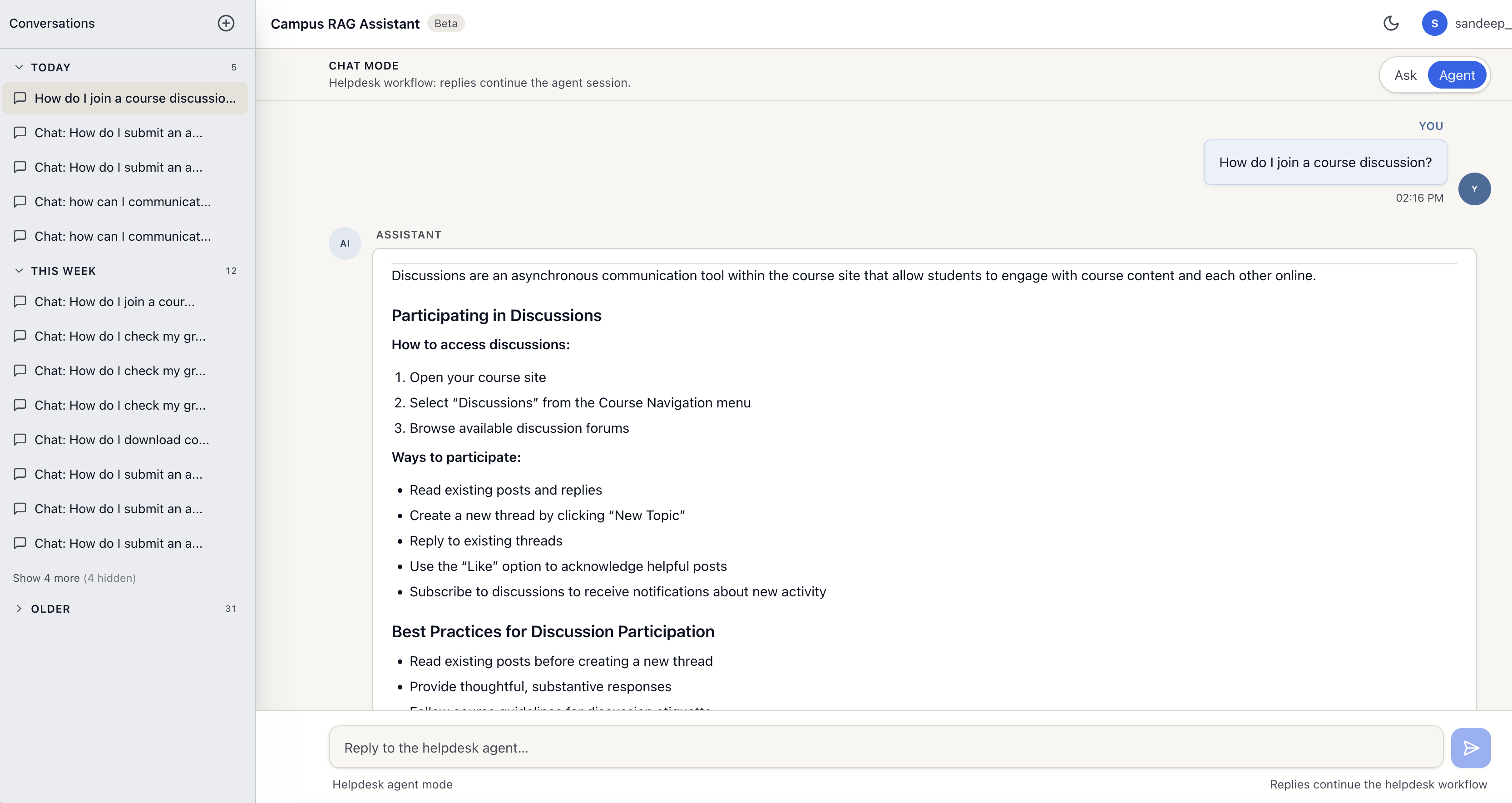
Knowledge-base answer
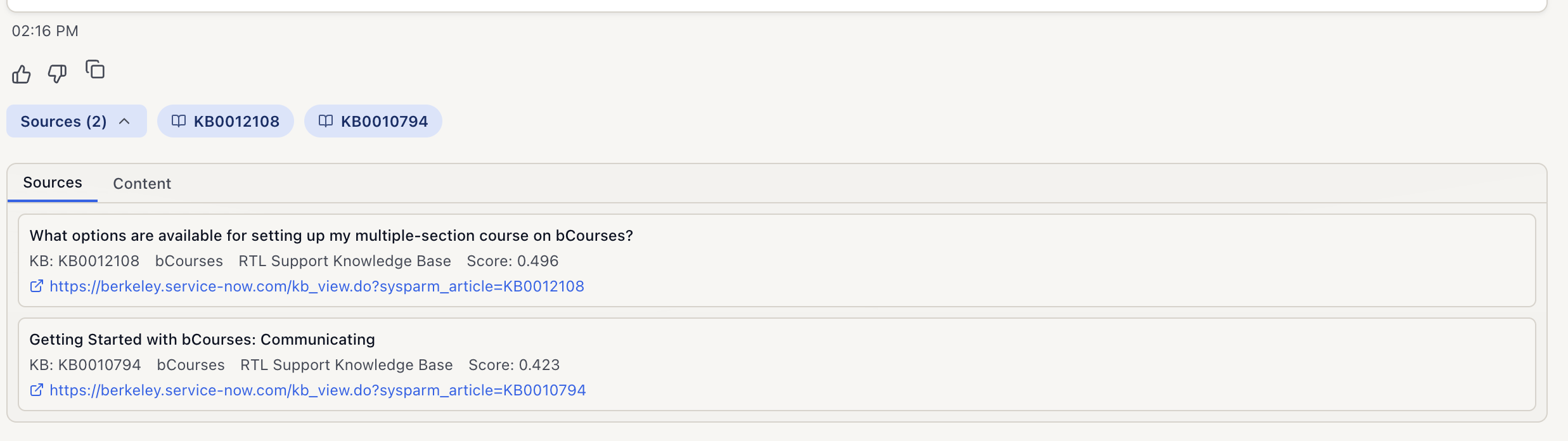
Source transparency
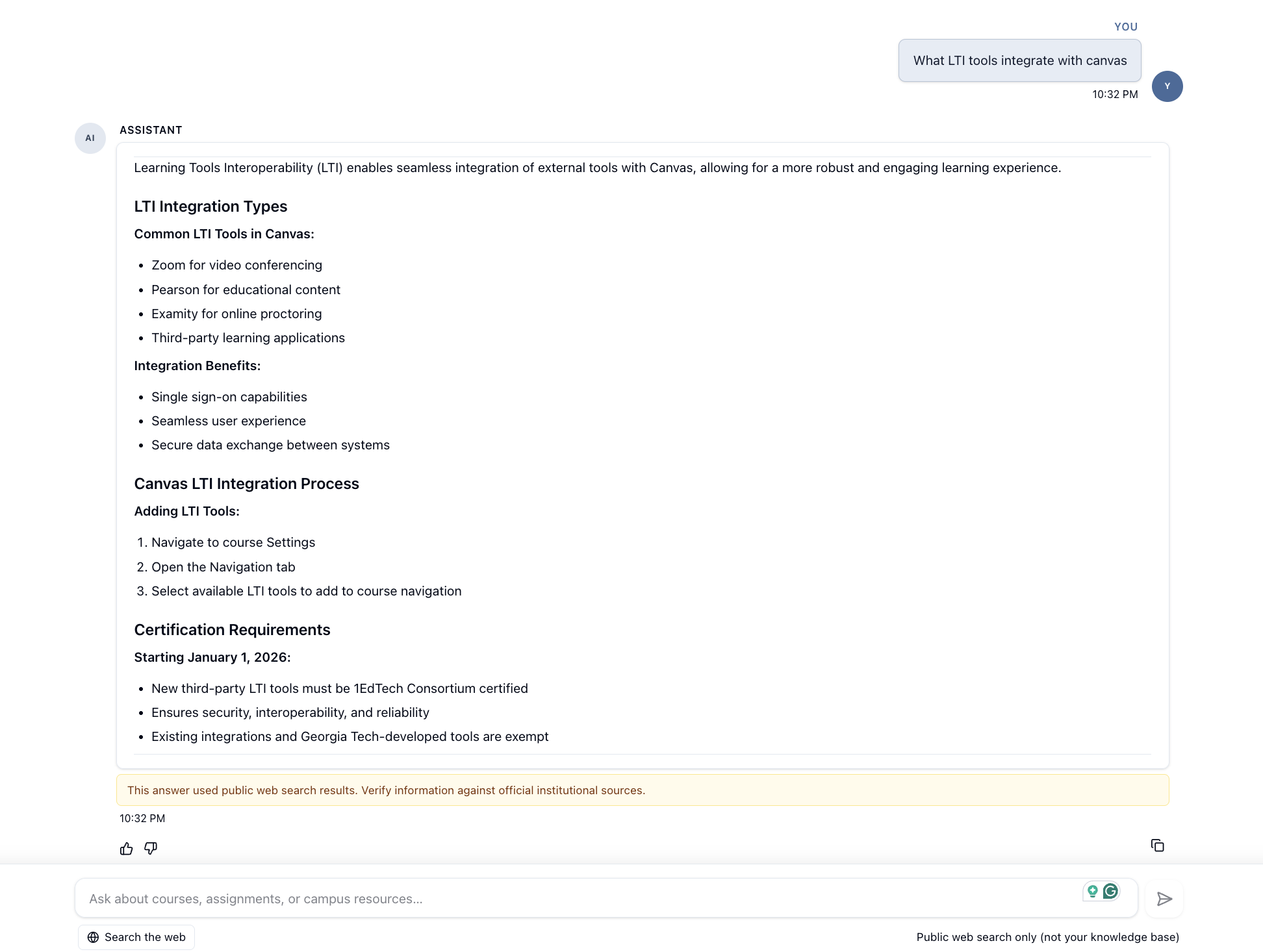
Opt-in web research
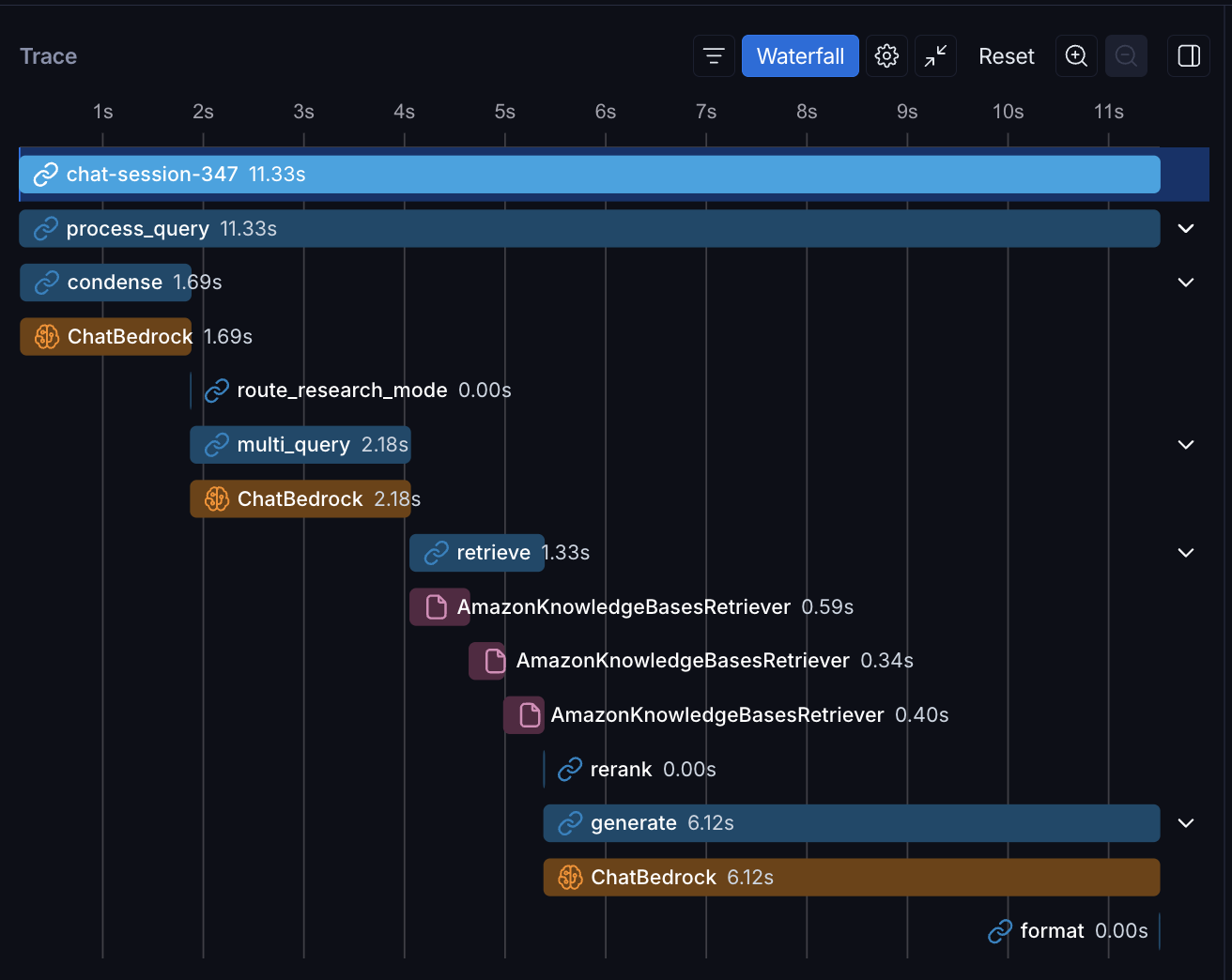
LangSmith trace
Helpdesk agent (v3)
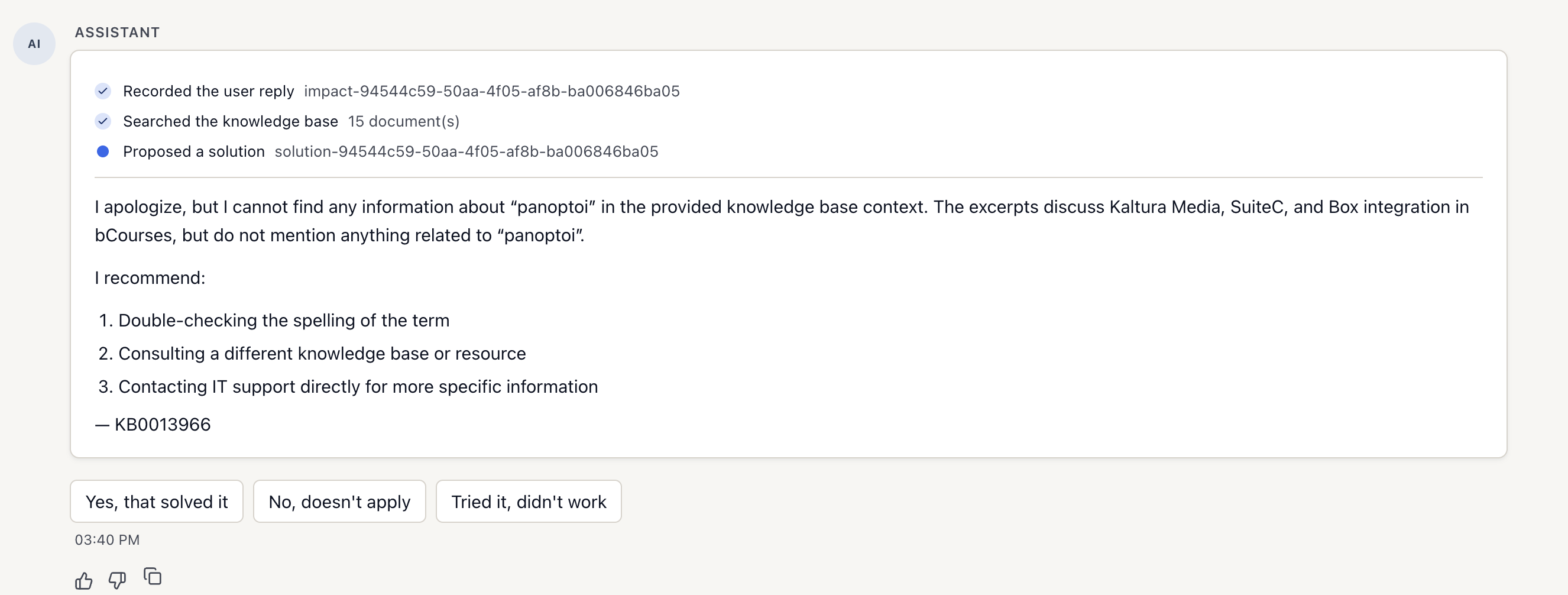
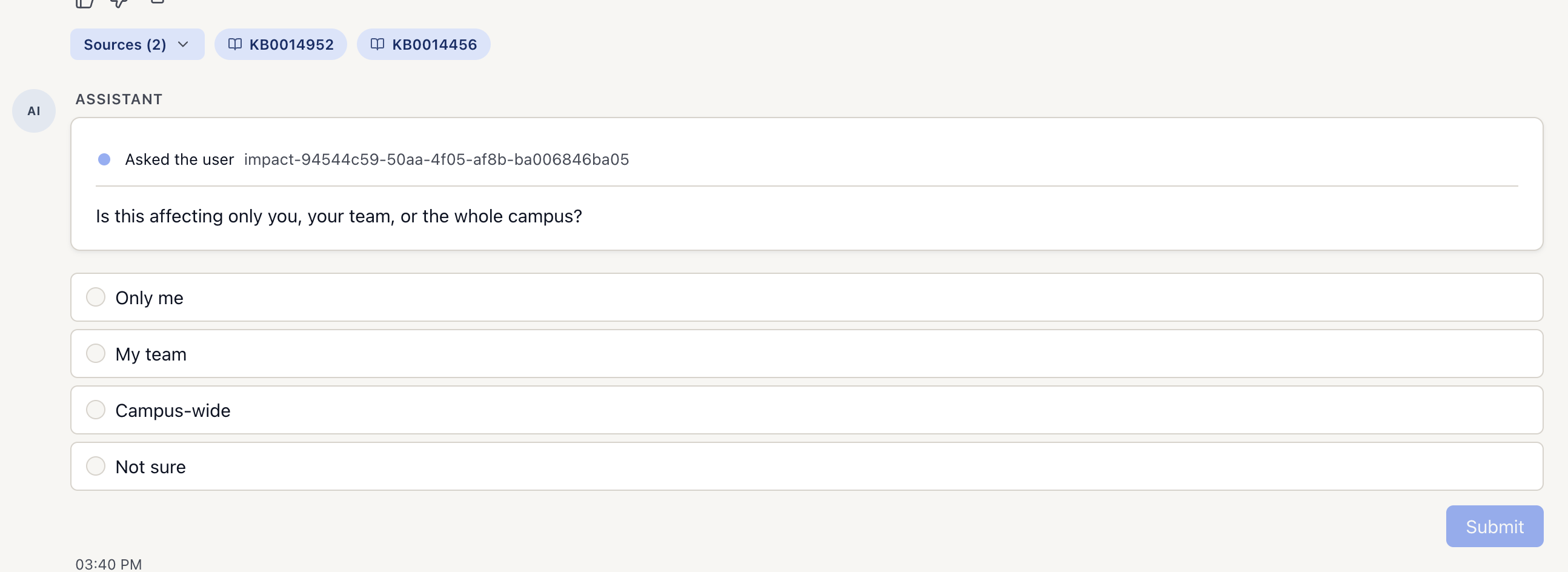
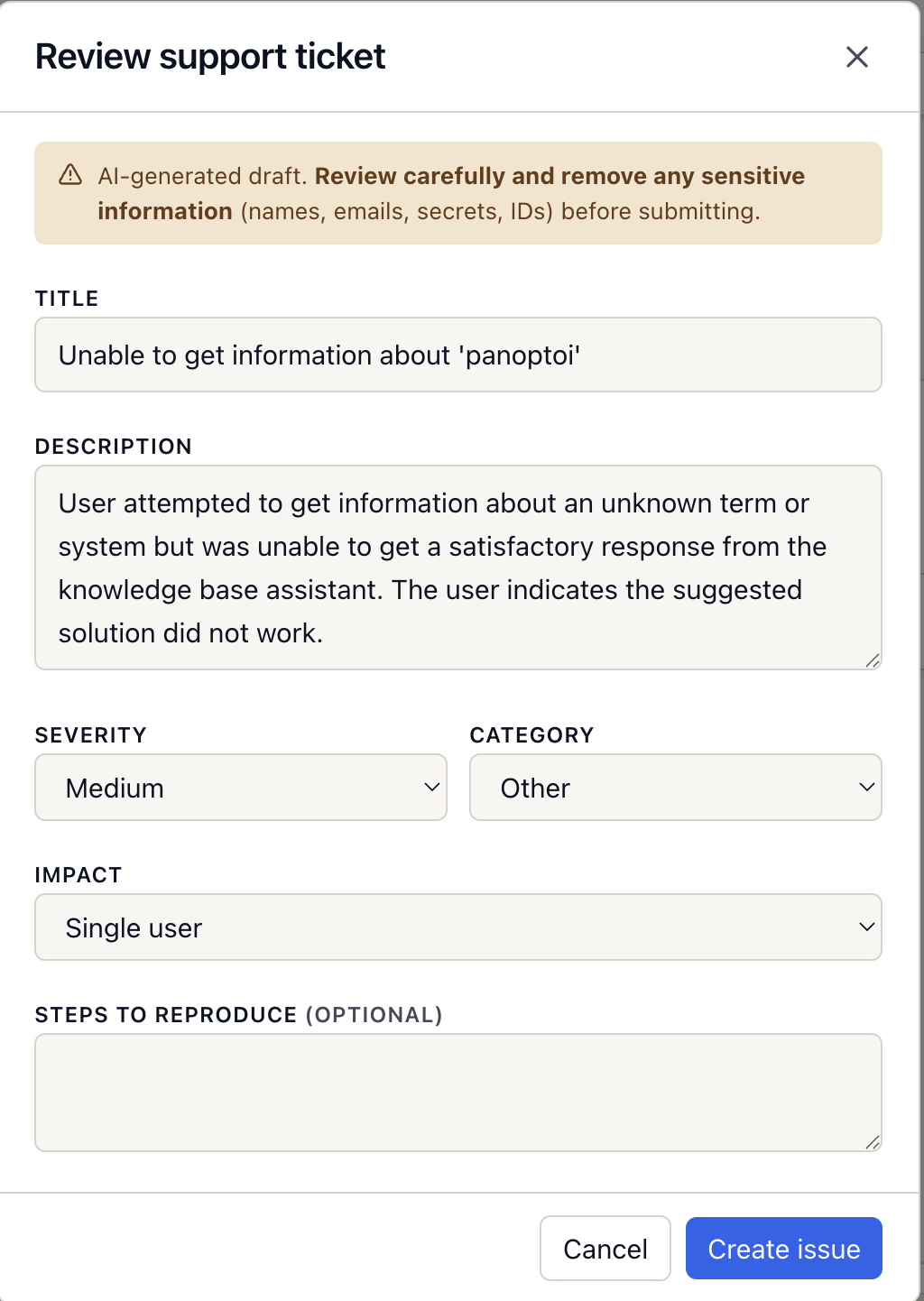
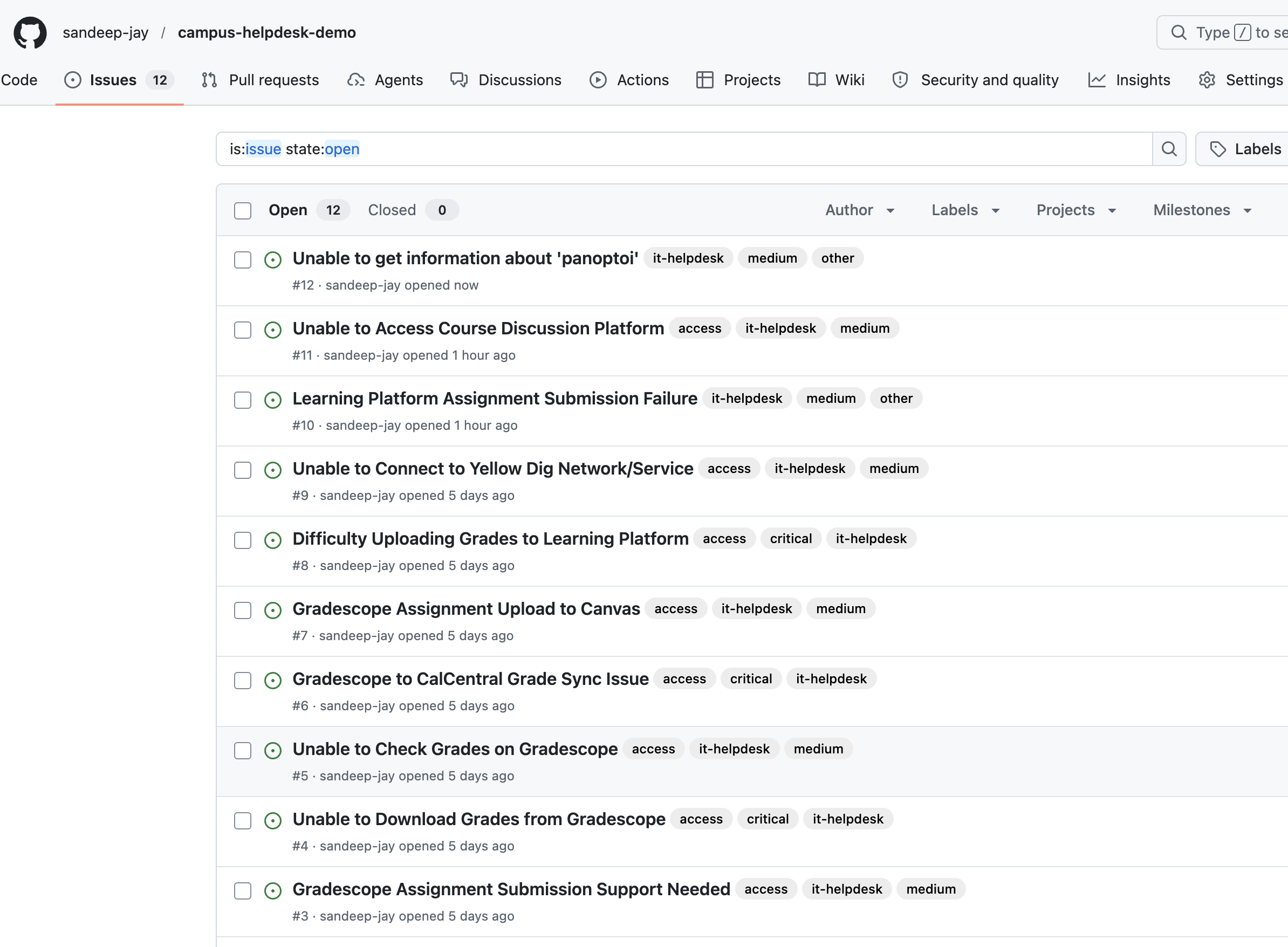
More assets: screenshots catalog.
Quality baseline
The project includes a RAGAS golden-set harness and a documented v2 retrieval baseline. Phase 5 retrieval tuning improved AWS context recall to 0.800, passing the retrieval coverage gate. Context precision remains the main improvement target.
This is an engineering baseline, not a marketing claim. Strict RAGAS gates are release controls, not blockers for local demo or ordinary PR CI.
Read more: Evaluation approach and baseline scores.
Stack
| Layer | Technologies |
|---|---|
| Backend | FastAPI, SQLAlchemy, Alembic, JWT auth, rate limiting, Prometheus metrics |
| Frontend | Vue 3, TypeScript, Pinia, Tailwind, Vitest, Playwright |
| RAG orchestration | LangGraph (RAG_ENGINE=langgraph) or LangChain ConversationalRetrievalChain (RAG_ENGINE=chain) |
| Retrieval | Bedrock KB / OpenSearch Serverless, Azure AI Search, multi-query + RRF, optional rerank |
| LLM | AWS Bedrock, Azure OpenAI, or mock provider |
| Web search | Mock or Tavily behind research_mode=web |
| Eval | RAGAS golden dataset, tox -e eval, LangSmith traces |
| CI/CD | GitHub Actions, tox, gitleaks, dependency review, no tool attribution, optional EB deploy |
Feature availability
| Configuration | What works |
|---|---|
No cloud keys (RAG_FORCE_MOCK=true) |
Register/login, chat UX, streaming path, source panel, feedback, local tests |
| AWS Bedrock KB | Managed KB retrieval, Bedrock generation, LangGraph retrieval stages, LangSmith trace capture |
| Azure OpenAI + AI Search | Azure provider path with vector/keyword/hybrid retrieval and cited answers |
| Web research enabled | Per-message web mode with disclaimer UI and WEB-labeled sources (mock or Tavily) |
| OAuth configured | GitHub OAuth handoff to Vue; Google-ready provider config |
| Eval keys available | RAGAS golden-set runs, release quality gates, LangSmith trace inspection |
Getting started
python3 -m venv venv && source venv/bin/activate
pip install -r requirements.txt
cp .env.example .env
# set RAG_FORCE_MOCK=true, LLM_PROVIDER=mock, RETRIEVER_PROVIDER=mock
docker compose --env-file /dev/null up -d db
alembic upgrade head
PIP_SYNC=0 ./scripts/run-backend-venv.sh          # http://127.0.0.1:8000
./scripts/run-frontend-vue.sh          # http://127.0.0.1:5173
Register a user and start a chat. Responses use the mock provider unless you configure live AWS/Azure providers. The backend runner starts and health-checks the Compose db service by default; set SKIP_DOCKER_DB=1 only when using an existing Homebrew/Postgres service. If another Postgres already owns port 5432, stop it before using the Compose database.
Origin and Scope
This repository builds from the public ets-berkeley-edu/chabot codebase and substantially extends it as an independent portfolio and educational project. The work here focuses on the AI platform surface: Vue product UI, provider abstraction, LangGraph orchestration, RAGAS evaluation, LangSmith observability, CI/CD, load testing, and operational documentation. It is not an official UC Berkeley or UC product.
See Notice for attribution details.
License
Software in this repository is licensed under the Regents of the University of California terms. See Notice for attribution details. Commercial use requires an agreement with UC OTL.